The Scientific Hook
Cellular senescence, characterized by a stable cell cycle arrest, resistance to apoptosis, and the secretion of a senescence-associated secretory phenotype (SASP), is a fundamental driver of aging and age-related chronic diseases [2, 5, 6, 8, 13]. The accumulation of senescent cells contributes to tissue dysfunction, chronic low-grade inflammation, and reduced healthspan [5, 13]. A promising therapeutic strategy involves the selective elimination of these detrimental cells, a process known as senolysis, which has demonstrated the potential to alleviate age-related pathologies and extend healthspan [2, 5]. This review focuses on quercetin, a natural flavonoid with established senolytic and autophagy-modulating properties, and its role in targeting cellular senescence for maximum impact [2, 9].
Molecular Mechanisms & Cellular Longevity
Senescent cells exhibit increased expression of pro-survival networks, rendering them resistant to conventional apoptotic stimuli [2]. These networks often involve proteins such as BCL-xL, PI3Kδ, and p21 [2]. Quercetin functions as a senolytic by selectively targeting these pro-survival pathways, leading to the apoptosis of senescent cells while sparing healthy, proliferating, or quiescent cells [2]. Specifically, research indicates that quercetin is effective against senescent human endothelial cells and mouse bone marrow-derived mesenchymal stem cells (BM-MSCs), and when combined with dasatinib, it effectively clears senescent mouse embryonic fibroblasts (MEFs) [2].
Beyond its direct senolytic action, quercetin also plays a crucial role in stimulating autophagy, a cellular process vital for the degradation and recycling of dysfunctional cellular components [9]. Studies have shown that quercetin can upregulate key autophagy markers such as LC3-II/I and Beclin1, thereby promoting the formation of autophagosomes [9]. This mechanism is particularly relevant in conditions like atherosclerosis, where quercetin suppresses the formation of foam cells induced by oxidized low-density lipoprotein (ox-LDL) and delays their senescence by regulating MST1-mediated autophagy [9]. By enhancing autophagy, quercetin contributes to cellular health, removal of aggregated proteins like tau, and overall cellular longevity, indirectly mitigating the detrimental effects associated with senescent cell accumulation and SASP [6, 9].
Clinical Evidence & Evidence-Based Benefits
Preclinical research provides robust evidence for the efficacy of senolytic agents, including quercetin, in improving various health parameters. In aged, radiation-exposed, and progeroid mice, a single administration of senolytics, including quercetin, significantly reduced senescent cell burden [2]. This clearance translated into improved cardiac function and carotid vascular reactivity within five days of treatment in old mice [2]. Furthermore, a single dose led to improved exercise capacity for at least seven months following irradiation of one limb in mice [2]. Periodic administration of senolytics extended healthspan in progeroid mice, delaying age-related symptoms, pathology, osteoporosis, and loss of intervertebral disk proteoglycans [2].
More recent studies further corroborate these findings, demonstrating that intermittent oral administration of dasatinib plus quercetin (D&Q) to naturally aged mice alleviated physical dysfunction and increased post-treatment survival by 36%, reducing mortality hazard by 65% [5]. Senolytics were also found to decrease naturally occurring senescent cells and their secretion of frailty-related proinflammatory cytokines in explants of human adipose tissue [5].
The benefits extend to neurological health, with studies showing that senolytic treatment can reduce tau protein aggregation and mitigate neurodegeneration in advanced-stage Alzheimer’s disease (AD) transgenic mouse models, leading to a reduction in total neurofibrillary tangle (NFT) density, neuron loss, and ventricular enlargement [6]. Moreover, senolytic therapy has been shown to alleviate amyloid-beta (Aβ)-associated oligodendrocyte progenitor cell (OPC) senescence and improve cognitive deficits in AD models, reducing neuroinflammation and Aβ load [8].
Metabolic improvements have also been observed; the D&Q combination attenuates adipose tissue inflammation by reducing senescent markers and SASP genes in perigonadal white adipose tissue [13]. This treatment also improved fasting blood glucose and glucose tolerance, along with systemic lipid profiles, suggesting a significant role for senolytics in combating metabolic dysfunction in old age [13].
Expert Protocol & Biohacker Tips
Leveraging the established scientific evidence, the strategic implementation of quercetin as a senolytic and autophagy stimulant can be integrated into a biohacking regimen. While individual dosages and protocols should be tailored and overseen by a healthcare professional, the research suggests that “mega-dose” and intermittent administration are key to maximizing impact [2, 5].
Given that quercetin is available in 500 mg capsules, a typical senolytic protocol for humans, often involving higher daily doses (e.g., 1000-1250 mg when combined with dasatinib), would necessitate taking multiple capsules per dose [5, 13]. Intermittent dosing, such as administration over a few consecutive days (e.g., 2-3 days) followed by an extended break (e.g., once a month or every few months), mirrors the effective “periodic drug administration” and “intermittent oral administration” observed in animal studies to reduce senescent cell burden and extend healthspan [2, 5]. This approach allows for the clearance of senescent cells and modulation of the SASP, followed by a period where the body can recover and benefit from the reduced senescent load.
To optimize quercetin’s bioavailability, which can be challenging, it is often recommended to consume it with a fatty meal or alongside compounds that enhance absorption. However, the Jarrow Formulas Vegan Quercetin is presented as a standalone supplement, indicating that a sufficient dosage is intended to achieve the desired effect. Regular monitoring of health markers and consultation with a physician are imperative to ensure safety and efficacy when adopting such protocols. The Jarrow Formulas Quercetin 500 mg capsules provide a suitable form for those looking to explore mega-dose senolysis and autophagy stimulation as part of their longevity strategy.
The AgingHack Vetted Selection
| Selection | Senolytic Agent | Autophagy Stimulator | Vetted Choice |
|---|---|---|---|
| Visual | 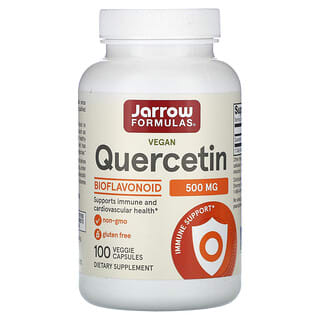 |  |  |
| Brand | Jarrow Formulas | Jarrow Formulas | Jarrow Formulas |
| Form/Purity | High Purity Pharmaceutical Grade | High Purity Pharmaceutical Grade | High Purity Pharmaceutical Grade |
| Advantage | Selectively targets and clears senescent cells by inhibiting anti-apoptotic pathways, reducing age-related cellular burden and SASP. | Promotes cellular longevity and health by stimulating autophagy, aiding in the degradation of cellular debris and dysfunctional components. | Contributes to improved physical function, cardiovascular health, and exercise capacity as demonstrated in preclinical models. |
| Price | $33.95 | $62.41 | $15.59 |
| Link | Shop on iHerb | Shop on iHerb | Shop on iHerb |
References & Academic Sources
- [2] The Achilles’ heel of senescent cells: from transcriptome to senolytic drugs.
- [3] TBD (From Blog Topics)
- [5] Senolytics improve physical function and increase lifespan in old age.
- [6] Tau protein aggregation is associated with cellular senescence in the brain.
- [8] Senolytic therapy alleviates Aβ-associated oligodendrocyte progenitor cell senescence and cognitive deficits in an Alzheimer’s disease model.
- [9] Quercetin Suppresses the Progression of Atherosclerosis by Regulating MST1-Mediated Autophagy in ox-LDL-Induced RAW264.7 Macrophage Foam Cells.
- [13] Senolytic drugs, dasatinib and quercetin, attenuate adipose tissue inflammation, and ameliorate metabolic function in old age.